
What Direct Air Carbon Capture Machines Are
Direct Air Carbon Capture (DAC) machines are large industrial systems designed to pull CO₂ directly out of the atmosphere , even when it’s extremely diluted (only ~0.04% of the air).
Think of them as giant air filters for the planet .
They don’t replace emissions reduction — but they help remove the CO₂ already accumulated in the atmosphere.
---
How DAC Machines Work (Simple Explanation)
Although designs vary, most DAC systems follow this basic process:
1. Air Intake
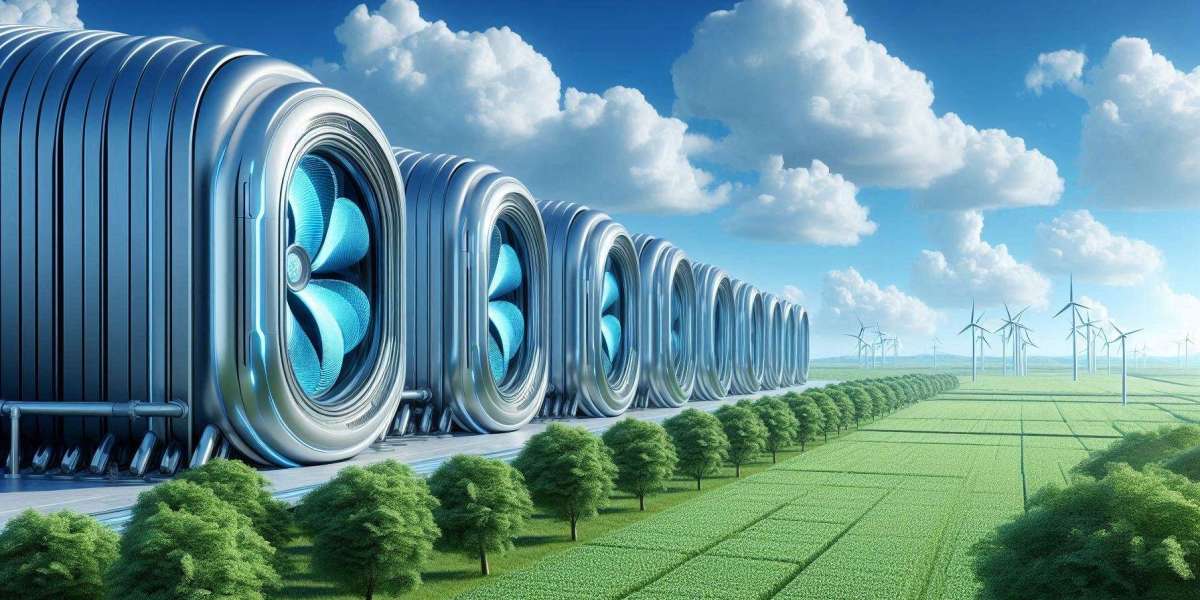
Huge fans pull in ambient air.
2. CO₂ Capture
The air passes through a special material that binds CO₂.
Two main types exist:
- Liquid sorbents (chemicals that absorb CO₂)
- Solid sorbents (porous materials that trap CO₂ on their surface)
3. Regeneration
The sorbent is heated or depressurized to release the captured CO₂.
4. CO₂ Storage or Use
The purified CO₂ can be:
- Stored underground (permanent removal)
- Used in industry (fuels, materials, beverages)
- Turned into stone (mineralization)
---
Why DAC Is Hard (and Impressive)
Capturing CO₂ from the air is extremely challenging because:
- CO₂ is very dilute
- It requires a lot of energy
- Materials must be durable and reusable
- Systems must run continuously for decades
This is why DAC is considered one of the most high‑tech climate engineering fields today.
---
Who’s Building DAC Machines Right Now
Several companies and research groups are leading the charge:
Climeworks (Switzerland)
- Built the world’s first commercial DAC plant in Iceland
- Uses solid sorbent filters
- Stores CO₂ underground where it turns into stone
Carbon Engineering (Canada)
- Uses liquid sorbents
- Backed by major energy companies
- Building large‑scale plants in the U.S.
Global Thermostat (USA)
- Uses ceramic solid sorbents
- Focuses on modular, scalable units
Heirloom (USA)
- Uses minerals that naturally absorb CO₂
- Accelerates the natural carbon cycle
Mission Zero, Verdox, Skytree, and others
- Developing electrochemical and modular DAC systems
---
Why DAC Matters
Even if the world stopped emitting CO₂ today, we’d still have too much in the atmosphere.
DAC helps:
- Offset hard‑to‑eliminate emissions (aviation, shipping, cement)
- Remove historical emissions
- Stabilize long‑term climate systems
- Create a “negative emissions” pathway
It’s not a silver bullet — but it’s one of the few technologies that can reverse atmospheric CO₂ levels.
---
The Future of DAC
Hi‑tech teams are working on:
- Cheaper sorbent materials
- Solar‑powered DAC plants
- DAC integrated with geothermal energy
- DAC + hydrogen fuel production
- DAC farms (thousands of modular units)
- DAC embedded in buildings and infrastructure
The goal is to bring the cost down from $600–$1000 per ton to $100 per ton , making it scalable worldwide.